

Episode #862
August 9, 2025
At 3600 feet the high chaparral hills of Aguanga are always green.
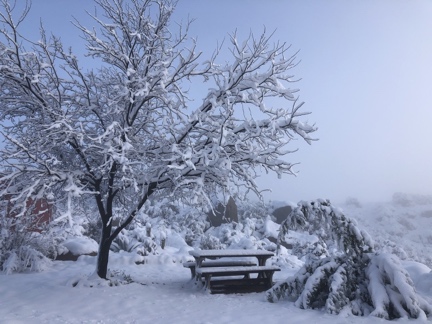
The evergreen brush consists primarily of Manzanita, Red Shank, and Chamise. These plants paint the hills with deep forest green. The only times that these hills are not green is when they are white. Several days in the winter, the hillside is dusted in snow. Snow stays for a day or two, converting the area to a winter wonderland.
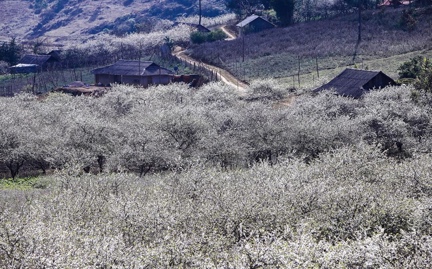
From January through July, the chaparral is white with blooms.
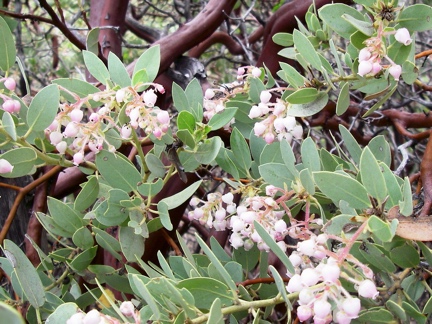
Manzanita blooms from January to March with urn-shaped pink and white flowers. The bees swarm over these plants in the Spring.
Red Shank blooms from April to June. They keep the pollinators working with loose sprays of creamy white blooms.
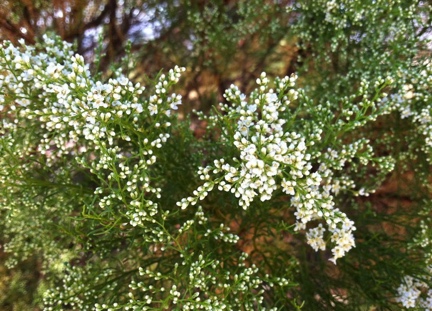
May through July, the Chamise is frosted with white flowers.
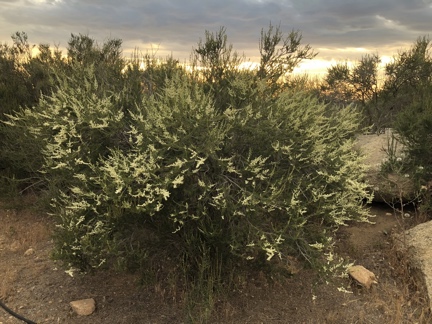
Some locals and firefighters call Chamise Greasewood because of the oily coating and flammability of the plant. Ecologists point out the value of Chamise because it rapidly regrows after fire and prevents erosion with its persistent root systems. Others call Chamise Ironwood because the flowers turn a rusty color after blooming.
Palo Verde trees are covered with yellow flowers.
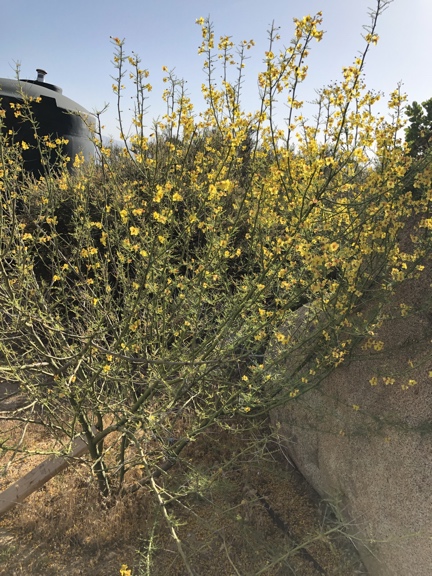
Desert Bird of Paradise has yellow-orange flowers spiked with a shock of red.
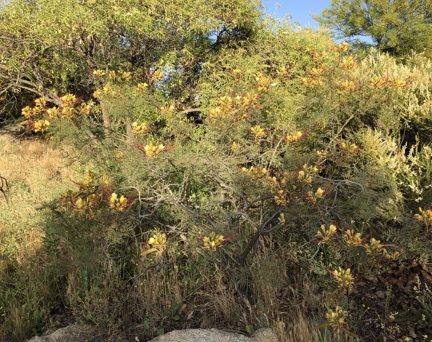
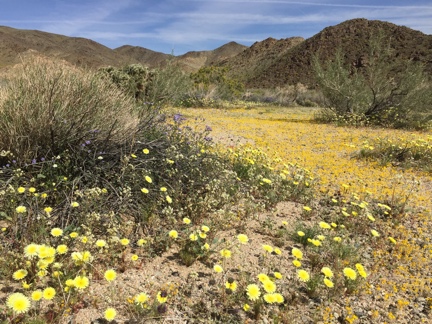
Ground bloom is abundant throughout the year.
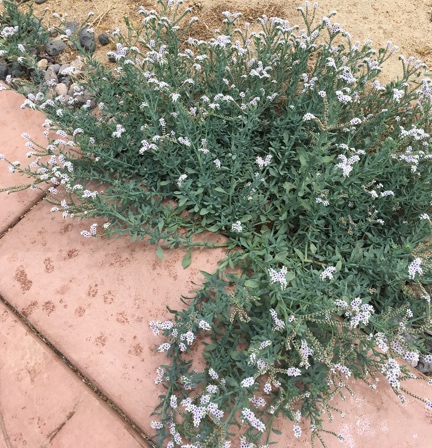
We have a yard covered with blooming Heliotrope instead of grass.
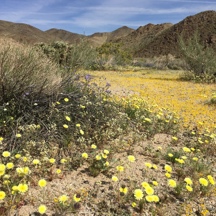
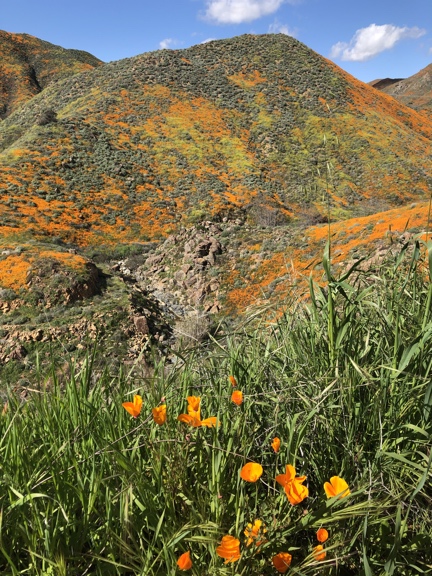
There are small yellow-throated Ground Pink flowers, bright magenta Red Maids, yellow Southern Suncups, bright red to purple Owl’s Clover, delicate blue Baby Blue Eyes, orange and yellow California Poppies, spiky clusters of blue-purple Blue Dicks, bright yellow daisy-like Goldfields, purple wild Canterbury Bells, and yellow centered Cream Cups.
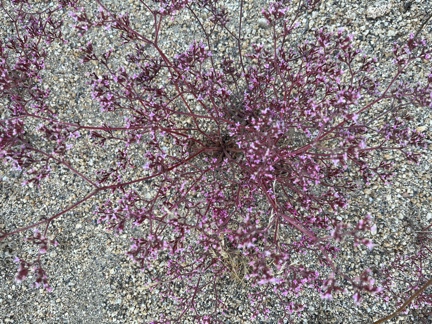
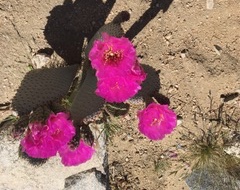
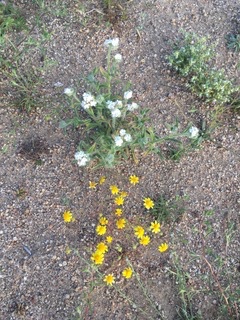
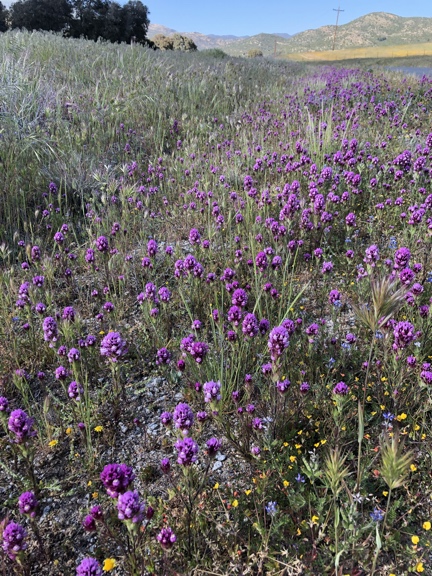
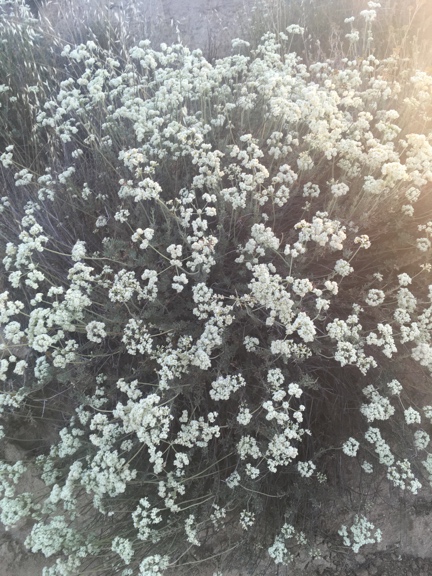
The Buckwheat gets bigger, covered with more blooms every year.
In the spring, my paddock becomes a sea of Mustard. They grow to four or five feet high and keep the local beekeepers in honey throughout the spring and summer.
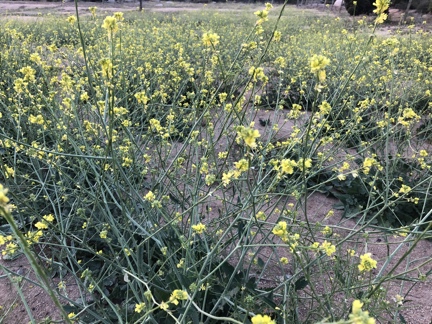
The first year I lived in Aguanga, the Mustard in the paddock was four feet tall. It was early morning when I noticed two ravens flying over and cawing at a ripple in the Mustard flowers. They followed the ripple 3 or 4 feet above until it emerged through the paddock fence as a full-grown Canada Lynx. The Lynx looked up at the ravens and shook its magnificent ruff of long white face mane and pointed ears.
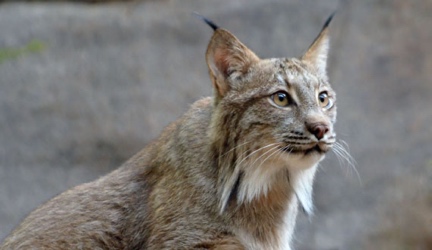
The ravens flew away in a rush. The Lynx looked me in the eye. She was about thirty yards away and could have closed on me in 2 seconds. I opened the garage door behind me and stepped inside. The Lynx’s belly was probably full of rabbit, and she was not interested in me. She wandered into the brush where I expect she lives.
Of course, there are also flowers around my house where I’ve planted and watered the plants. The Acacia purple, Palo Verde yellow, Apple white-pink, Cherry blossom pink, and the purple, white, yellow, and pink of butterfly bushes decorate my yard.
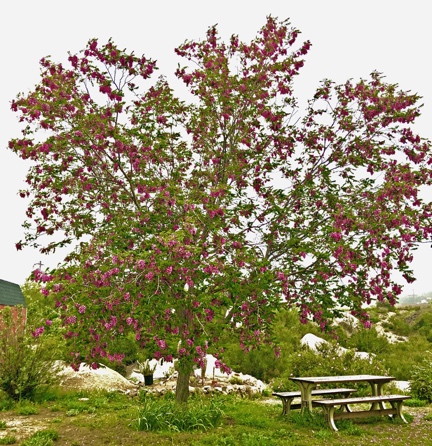
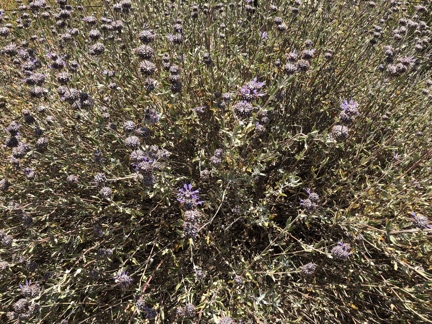
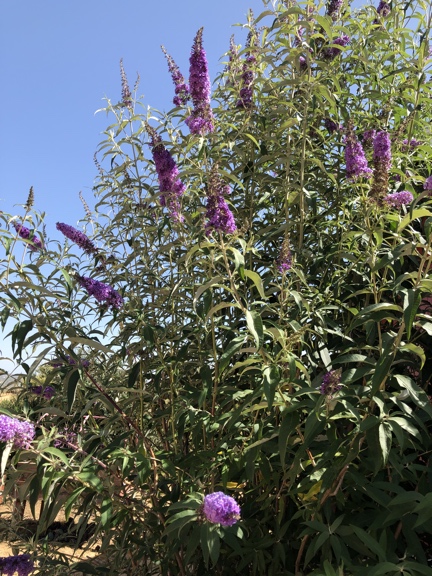
The vista of high-altitude chaparral celebrates life in a most potent way.
IF YOU LIKE THIS BLOG YOU’LL LOVE MY BOOKS:
“Skydivers Know Why Birds Sing” by Ricki T Thues is now available on Amazon.
It is a Love story of Rick and Paula Thues and their 35 years of Skydiving.
Click HERE to buy the paperback or Kindle ebook at Amazon.

Follow Ricki T Thues on Amazon HERE.
ALSO AVAILABLE:
“Technically Human” by Ricki T Thues, the iMentor, is available on Amazon.
It is a compilation of selected episodes from this bLog which tell the story of Humanity through the eyes of the iMentor.
Click HERE to buy the paperback or Kindle ebook at Amazon.
The ebook version of “Technically Human” is also available on Kobo. Click HERE.
For you Barnes and Noble Nook readers it is available for Nook. Click HERE.
The “Technically Human” ebook is also available on Apple Books . Click HERE.




What an excellent review of the local flowers, trees, and shrubs. Lots of color from these beautiful plants!
Enjoyed the botany!