

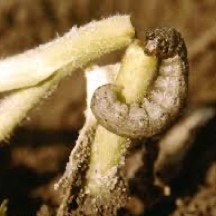
Episode #863
August 16, 2025
Paula grows tomatoes in her greenhouse.
There have been various diseases and pests over the years, ranging from blight to tomato hornworms.
Copper fungicides have been effective for blight and leaf spot. Some bacterial and viral diseases require the removal of the plants.
Pests require more aggressive measures. Hornworms can be hand-picked off the plants. Neem oil disrupts worm feeding and larval growth. It repels many pests. Bacillus Thuringiensis (BT) is a natural bacterium effective on caterpillars. Slugs and snails can be caught and drowned in beer traps. Spider Mites are sprayed with water (they hate humidity). Soap spray and Neem oil are also effective. Use the same tools against aphids and ants. Don’t be afraid to blast them off with water sprayed directly on the plants.
Last month, Paula noticed entire stalks of the tomato plants had wilted and fallen. Stalks were sheared off at ground level.
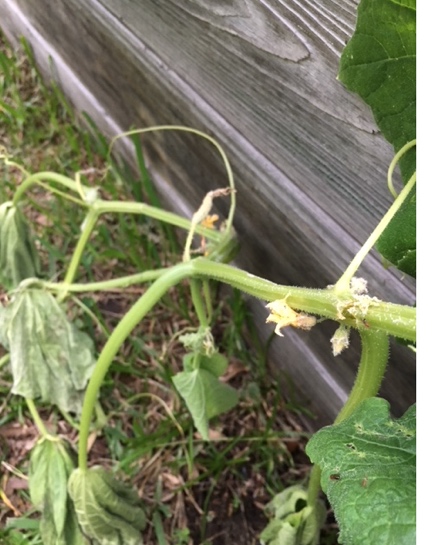
I asked the AI what it could be. The answer was an unequivocal “Cutworms.”
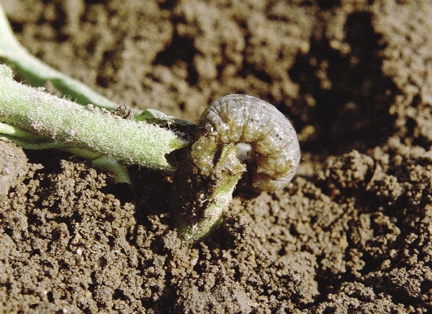
We did several things to save the tomatoes. First, we sifted around in the ground, looking for cutworms.
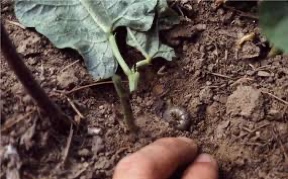
Then we cleared low-hanging stems and leaves from the ground. Next, I fashioned plant collars from aluminum foil, wrapping the stalks and sinking the foil into the ground. Used coffee grounds were scattered on the ground around the collars with diatomaceous earth sprinkled over the grounds. Finally, I sprayed the lower branches, stalks, and mulch with the beneficial bacteria, Bacillus Thuringiensis.
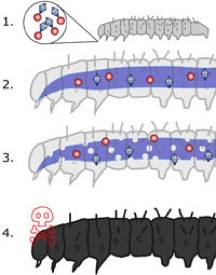
Most of these measures, such as picking the worms off at dusk, also work with tomato hornworms. Additionally, Neem Oil can prevent egg laying and feeding for both cutworms and hornworms.
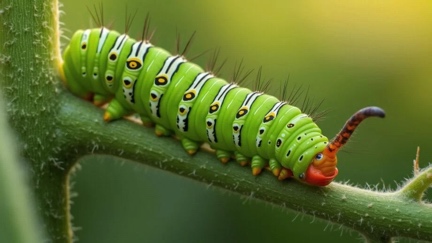
Collars do not work for hornworms because they stay in the upper foliage where their eggs were laid. Tilling the soil works better for cutworms because it exposes the larvae. Cutworm larvae eggs are laid in the lower leaves, stems near the ground, and debris on the ground. These larvae hide in the soil during the day.
Companion planting can help prevent hornworms. Plants like basil, marigold, and dill repel hornworm moths.

Parasitic congregata wasps are an organic solution to eliminate hornworms. Once you see the hornworms or their eggs, release the wasps. They will inject eggs into the hornworm body, making it a host for the congregata larvae. But, even though hornworms look like alien creatures, Paula thinks that parasitic wasps are creepy.
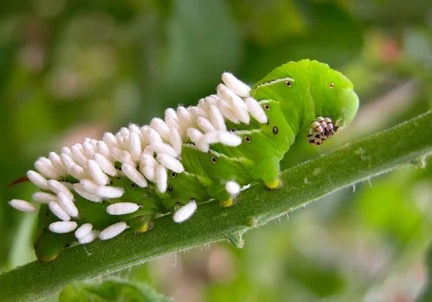
We have searched the ground and lower stalks for the curled-up cutworms for several days now. None have been found. There have also been no new stalks or stems cut. We are hopeful that our measures were successful.
IF YOU LIKE THIS BLOG YOU’LL LOVE MY BOOKS:
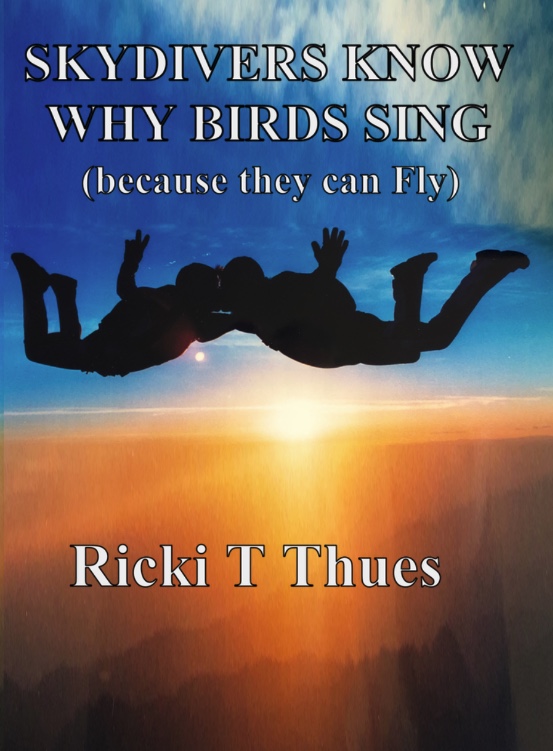
“Skydivers Know Why Birds Sing” by Ricki T Thues is now available on Amazon.
It is a Love story of Rick and Paula Thues and their 35 years of Skydiving.
Click HERE to buy the paperback or Kindle ebook at Amazon.
Follow Ricki T Thues on Amazon HERE.
ALSO AVAILABLE:
“Technically Human” by Ricki T Thues, the iMentor, is available on Amazon.
It is a compilation of selected episodes from this bLog which tell the story of Humanity through the eyes of the iMentor.
Click HERE to buy the paperback or Kindle ebook at Amazon.
The ebook version of “Technically Human” is also available on Kobo. Click HERE.
For you Barnes and Noble Nook readers it is available for Nook. Click HERE.
The “Technically Human” ebook is also available on Apple Books . Click HERE.