

Episode #905
June 6, 2026
There was a time when truth moved through a few careful hands.
Editors at The New York Times and voices like Walter Cronkite slowed, shaped, and released information with authority.
Now truth moves differently. In the hands of internet influencers, what is accepted as truth travels faster, but also farther. More voices enter. More perspectives surface. Errors spread quickly, but so do corrections. Truth is no longer held—it is tested in public. Wikipedia is an example of at first distrusted content that, through crowd sourcing and editing, became reliable.
Authority has shifted from title to trust. It is built in the open, earned through consistency, not assigned by position.
Memory no longer sits still. It circulates, resurfaces, evolves. The past is not just preserved—it is continuously revisited.
Consensus has given way to plurality. Not one shared narrative, but many. This fragments—but it also reveals.
Identity has opened. It is no longer fixed by place. It is explored, expressed, and refined in real time.
The gatekeepers are gone. The gate is open. The open gate does not just let noise through. It lets through voices that would never have been admitted.
A creator like Elle Cordova does not arrive with institutional backing.

There is no editorial board, no formal credentialing. And yet her words travel—because they resonate.
This is not new. It is a return to the philosophical past.
Oscar Wilde built credibility not through permission, but through precision—language sharpened until it could not be ignored.
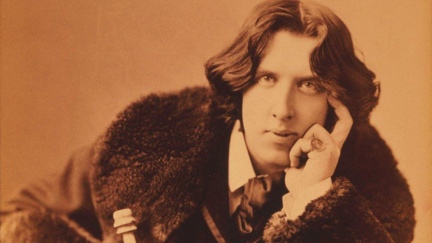
“The truth is rarely pure and never simple.”
— Oscar Wilde (The Importance of Being Earnest)
Søren Kierkegaard wrote from the margins, often under pseudonyms, trusting that depth would outlast obscurity.
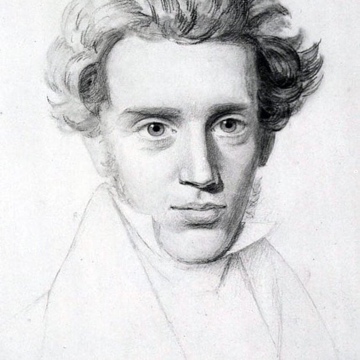
He proposed that understanding always arrives after the lived moment, never inside it
“Life can only be understood backwards, but it must be lived forwards.”
— Kierkegaard (from The Journals of Søren Kierkegaard)
Neither of these philosophers would have “tested well” in a gatekept system built on immediate consensus. Both required time, distance, and reception. That environment is supercharged by the internet.
Cordova’s fragments—brief, lyrical, often disarming—operate the same way.
A line widely shared online and attributed to Elle Cordova captures her recurring theme:
“I hope you outgrow things that aren’t meant for you.”
This statement does not need to argue for authority. It demonstrates it. The line lands, and in that moment, credibility is granted—not by title, but by recognition.
The medium has changed. The mechanism has not. What once depended on slow circulation now happens in real time: a thought expressed clearly enough to cut through distraction, a voice distinct enough to be remembered.
The noise is real. But so is the signal. And sometimes, the signal sounds like a poet with no gatekeeper—speaking directly into the open.
What has emerged is not disorder, but participation; truth that can be challenged, authority that must be earned.
It is culture shaped not by permission, but by possibility.
IF YOU LIKE THIS BLOG YOU’LL LOVE MY BOOKS:
“Skydivers Know Why Birds Sing” by Ricki T Thues is now available on Amazon.
It is a Love story of Rick and Paula Thues and their 35 years of Skydiving.
Click HERE to buy the paperback or Kindle ebook at Amazon.
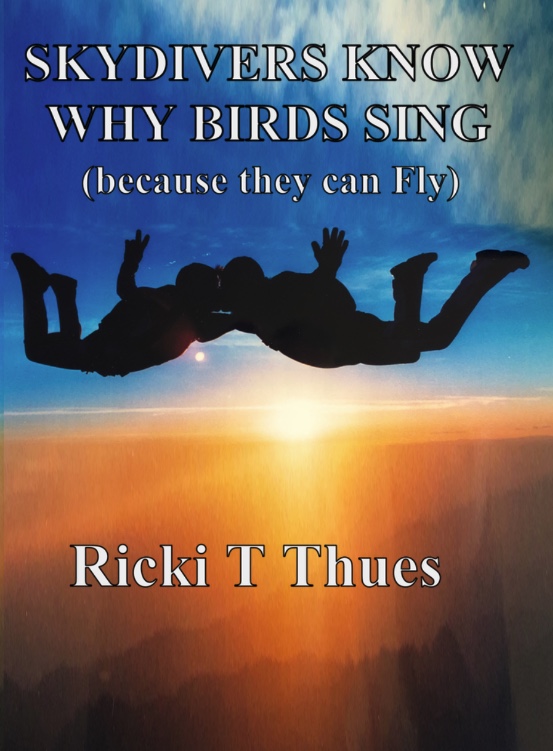
Follow Ricki T Thues on Amazon HERE.
ALSO AVAILABLE:
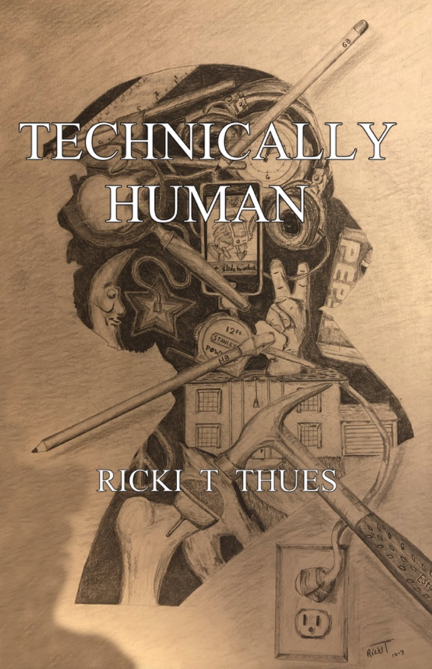
“Technically Human” by Ricki T Thues, the iMentor, is available on Amazon.
It is a compilation of selected episodes from this bLog which tell the story of Humanity through the eyes of the iMentor.
Click HERE to buy the paperback or Kindle ebook at Amazon.
The ebook version of “Technically Human” is also available on Kobo. Click HERE.
For you Barnes and Noble Nook readers it is available for Nook. Click HERE.
The “Technically Human” ebook is also available on Apple Books . Click HERE.


I signed up for Elle, thanks for the post.
You might enjoy Jesse Welles also, a modern day Bob Dylan. https://www.youtube.com/@hellswelles