
Episode #899
April 25, 2026
After I ran Precision Cabinet company,
I worked at Walter and Cline architectural mill.
In 1983, the Walter and Cline closed.
Everyone lost their jobs.
Four of my friends and I signed up at the Anaheim Carpenters’ union and waited for an interview. We all got called to Disneyland. The old-time German foreman hired all of us for the Disneyland Fantasyland remodel. Terry would be the draftsman, Roger would do the field dimensions and cabinet work, Bob would be the hand carver, and I was assigned to do the specialty woodwork.
When I first saw Walt Disney’s original rendering of the organ enclosure for the Fantasyland remodel at Disneyland, I knew we were in for something special. Walt’s sketches are deceptively simple—they captured the magic in broad strokes, but they left all the structural decisions and practical details to the craftsmen who would bring them to life.
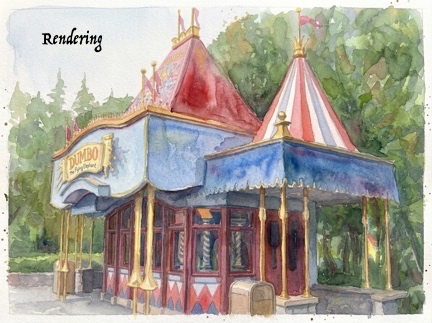
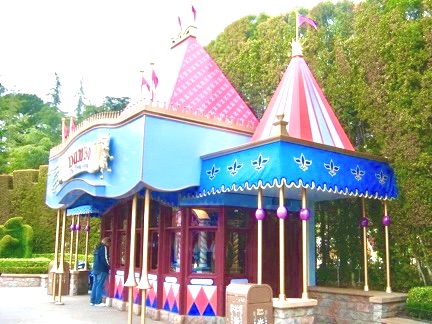
Our team was tasked with taking that 2D vision and turning it into a fully functional, three-dimensional piece that would not only be beautiful but also interactive, durable, and mechanically reliable. This was our realization of the rendering above:
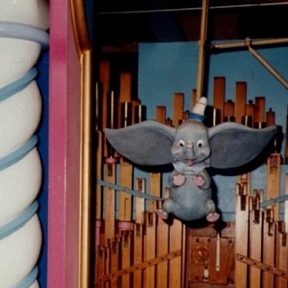
The project began with field measurements. The structure had to fit in a finite space. Every curve, every panel, every planned opening had to be drafted precisely. The organ was to be installed in a finished cabinet with moving parts, doors, and even animatronic characters that would pop out like a coo coo at hourly intervals.
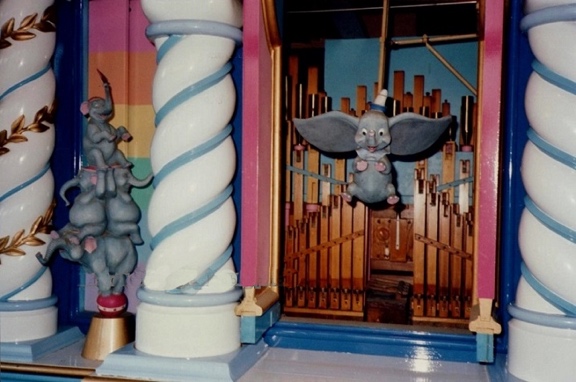
That meant nothing could be left to chance. We measured and double-checked every dimension, factoring in tolerances for moving components and ensuring that the final piece would fit seamlessly into the existing theme park environment. Accuracy wasn’t just important—it was critical. One miscalculation could ripple through the entire assembly, affecting both form and function.
Once the measurements were in hand, the next challenge was the construction of the organ’s structural framework and decorative elements. The barley twist posts alone were a feat of engineering and craftsmanship. With the help of my senior mentor, we designed a custom system to produce the barley-twist columns: a 6-foot lathe modified with a metal track to guide a router. One end of each wooden post was turned down precisely so the circumference matched the twist’s run. Wrapping a cable around that turned end allowed me to manually rotate the piece, dragging the router along the length of the post, cutting a uniform, 3-inch deep spiral which repeated every eight inches. Tilting the router for each run created the smoothly curved twists. It was a hybrid of traditional woodturning, mechanical ingenuity, and sheer patience—each post had to be identical, both structurally and visually. In the end, they conveyed the whimsical elegance of the original design.
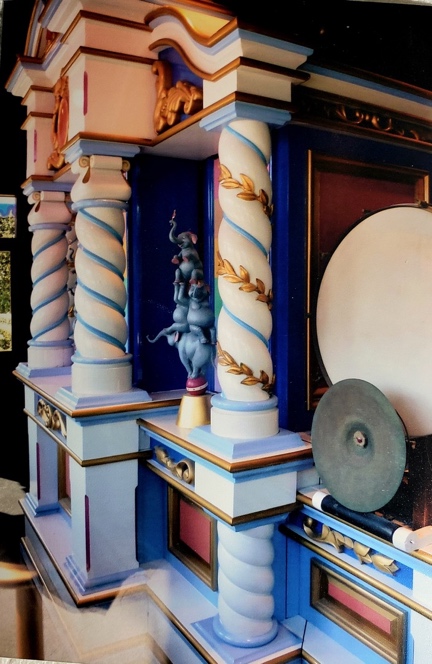
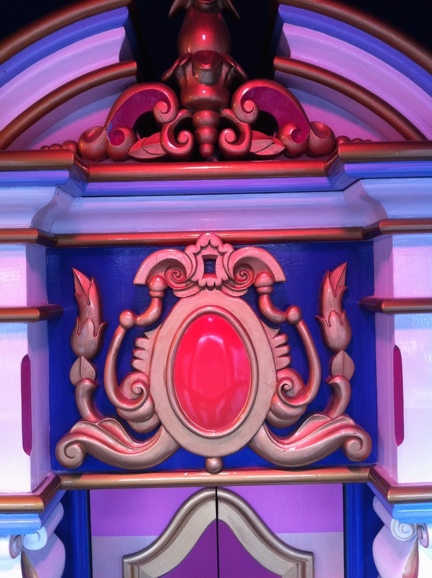
The hand-carved decorative elements posed another set of challenges. Unlike the posts, these details couldn’t be mechanized. Each carving required Bob’s careful hand and an understanding of how the light would interact with the shapes once the organ was installed.
We were extremely proud of this work, and even though it was against the rules, our signatures live behind carvings and under details.
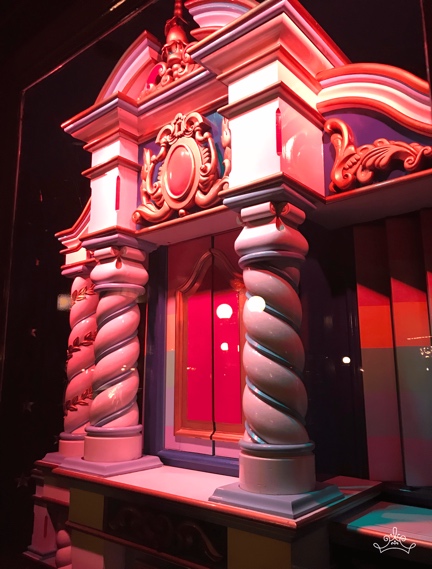
The doors had to swing smoothly, align perfectly with the surrounding framework, and endure repeated use without sagging or binding. Meanwhile, the animatronic characters demanded precise spacing, mounting, and clearances. We had to ensure that the mechanisms operated freely, that the characters’ movements were synchronized with the music, and that nothing interfered with the woodwork or finish.
Speaking of finish, every surface had to meet the highest standard of durability and appearance. The organ would be in a high-traffic area and exposed to the elements. Our choice of finishes balanced authenticity with resilience. High gloss enamel and real gold gilding highlighted the deep twists and carvings while protecting against wear and aging.
As we moved toward final assembly, the true test was fitting the organ and its mechanisms into the cabinet. Every piece, from the barley-twist posts to the carved panels, doors, and animatronics, had to come together perfectly. It was a delicate puzzle: the spatial tolerances were tight, the moving parts unforgiving, and the aesthetic demands uncompromising. Seeing the components slide into place, aligning seamlessly, and operating exactly as designed was a profound moment. After months of meticulous work, what started as a simple rendering on paper had become a fully realized, interactive structure that combined carpentry, cabinetmaking, and mechanical engineering into a single, cohesive whole.
Looking back, the project was more than just a build—it was a lesson in the intersection of craft, creativity, and ingenuity. Every challenge, from translating a two-dimensional rendering into a structurally sound piece to producing perfect barley twists, hand-carving delicate details, and integrating animatronic mechanisms, required patience, skill, and a deep respect for the original vision. It was an exercise in precision.
Working on the Disneyland Fantasyland organ reminded me why I fell in love with woodworking in the first place: it’s not just about shaping wood, it’s about shaping experiences, telling stories through craft, and leaving something tangible that delights people long after the tools are put away.
IF YOU LIKE THIS BLOG YOU’LL LOVE MY BOOKS:
“Skydivers Know Why Birds Sing” by Ricki T Thues is now available on Amazon.
It is a Love story of Rick and Paula Thues and their 35 years of Skydiving.
Click HERE to buy the paperback or Kindle ebook at Amazon.
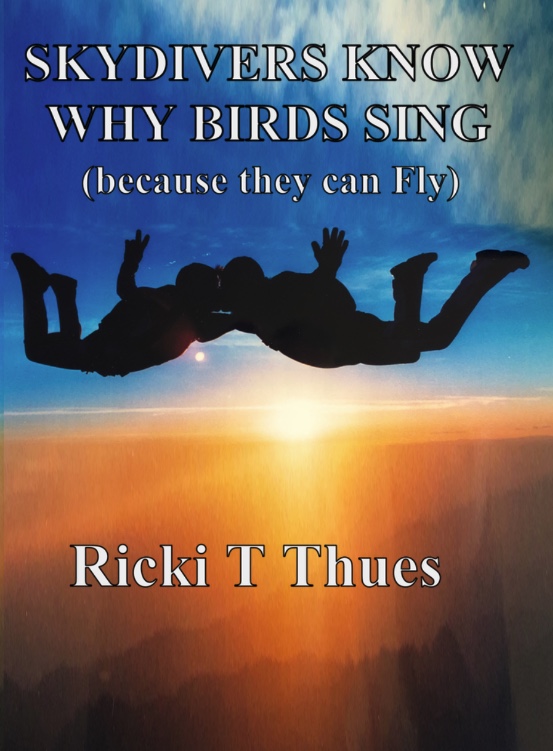
Follow Ricki T Thues on Amazon HERE.
ALSO AVAILABLE:
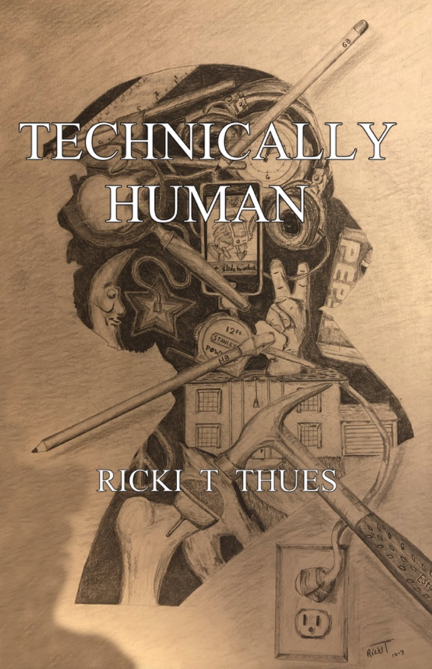
“Technically Human” by Ricki T Thues, the iMentor, is available on Amazon.
It is a compilation of selected episodes from this bLog which tell the story of Humanity through the eyes of the iMentor.
Click HERE to buy the paperback or Kindle ebook at Amazon.
The ebook version of “Technically Human” is also available on Kobo. Click HERE.
For you Barnes and Noble Nook readers it is available for Nook. Click HERE.
The “Technically Human” ebook is also available on Apple Books . Click HERE.



Decades after the Fantasyland remodel, I was visiting Disneyland with my then-small children. As we were enjoying the magical ambience of the place, I was able to say to my sons “I know one of the guys who built that!” It is an amazing piece, and it’s cool to know a bit of the inside story.
so awesome!!
Love this post! I know the story but reading your words gave my memories wonderful pictures. Measure twice, cut once!
I love that you all signed your names in inconspicuous places!