

Episode #924
October 17, 2026
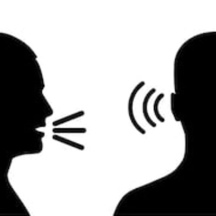
I was halfway through a thought when my friend smiled and said,
“Exactly. You’re saying people are too dependent on technology.”
I nodded, then quietly finished my sentence.
“…when it replaces their ability to think for themselves.”
Those last nine words changed the shape of everything.
A sentence is not simply speech. It is sometimes thinking out loud. Most conversation is not the exchange of finished ideas, but the unfolding of ideas in real time. The difficulty is that we rarely listen to the unfolding. We listen for the outcome.
Patience is more than waiting for someone else to pause talking. It is waiting for them to finish thinking out loud. Only then can we know what they truly mean. Until then, we are listening to our prediction instead of their words.
This is where misunderstanding begins. The listener hears enough to recognize a familiar pattern and completes the sentence early—not with what is being said, but with what they assume will be said. The speaker may never even notice when the interruption begins because it happens first in the listener’s mind.
A prepositional phrase, or any qualifying phrase, is often where meaning is delivered. “I enjoy being alone” seems complete until it continues: “…after spending several days in a crowd.” What appeared to be the whole meaning was only the beginning of it. The qualification is not decoration—it is clarification.
The cost is gradual. A speaker who is repeatedly completed by others begins to adjust their speech. They simplify, trim nuance, and avoid ideas that require patience—not because the ideas are simpler, but because they want to be understood. The listener experiences this as efficiency: fewer pauses, fewer clarifications, fewer hesitations. But what has been removed is not confusion—it is depth. The conversation moves faster only because it now follows the narrow paths that are easiest to predict.
And yet the impulse to finish another person’s thought is rarely careless. It often comes from recognition, enthusiasm, or the desire to show understanding. But there is a difference between recognizing a pattern and receiving a thought. The first replaces what is unfolding with what is expected. The second allows meaning to arrive on its own terms.
To listen well is to resist completion. It is to allow another person’s thought to remain unfinished in our mind until it is finished in theirs. Only then does understanding become possible.
When someone begins a thought, I do less and anticipate less. I arrive less quickly at conclusions. I let the sentence become without interference.
Most conversations are not about speaking clearly.
They are about being heard completely.
And that only happens when we are patient enough to let another person finish thinking out loud.
IF YOU LIKE THIS BLOG YOU’LL LOVE MY BOOKS:
“Skydivers Know Why Birds Sing” by Ricki T Thues is now available on Amazon.
It is a Love story of Rick and Paula Thues and their 35 years of Skydiving.
Click HERE to buy the paperback or Kindle ebook at Amazon.

Follow Ricki T Thues on Amazon HERE.
ALSO AVAILABLE:
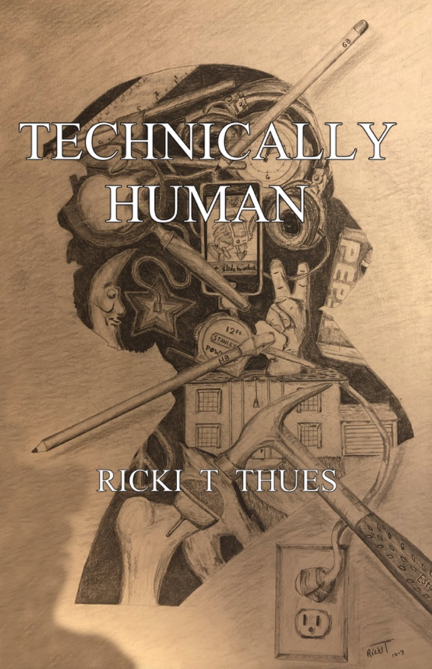
“Technically Human” by Ricki T Thues, the iMentor, is available on Amazon.
It is a compilation of selected episodes from this bLog which tell the story of Humanity through the eyes of the iMentor.
Click HERE to buy the paperback or Kindle ebook at Amazon.
The ebook version of “Technically Human” is also available on Kobo. Click HERE.
For you Barnes and Noble Nook readers it is available for Nook. Click HERE.
The “Technically Human” ebook is also available on Apple Books . Click HERE.
Ricki is also a contributor to the Writers Anonymous short stories anthology, “Matters of Life and Death, Stories on the Brink.” CLICK HERE.

The newest Writers Anonymous short stories anthology, “Stories Well-Traveled,” is now available on Amazon.
It is a collection about the different paths Writers Anonymous has traveled, both real and imagined, and how, through these stories, we have stayed connected.
CLICK HERE.