

Episode #876
November 15, 2025
There is winter where I live.
It snows occasionally,
and winter is dotted with freezing temperatures.
My house came with an electric space heater. It is located in a narrow hallway remote from the living room.
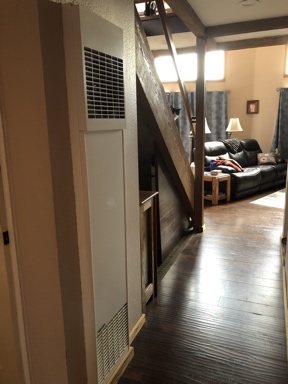
I place a box fan pointing into the living room to move the heated air to where we spend most of our time. This works well enough, but the heater is 220 volts and costs a fortune to run.
There was a wood-burning stove in the living room, which worked pretty well to heat the house. The primary damper, which directs fresh air under and through the burning wood, was inoperative. It was necessary to leave the stove door slightly open to get oxygen flowing over the fire. This allowed smoke to leak into the room. The flue damper was only fully open or fully closed. Consequently, the fire always raged too hot. I decided to buy a new stove.
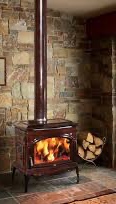
The stove I bought is very efficient. The damper and flue controls are variable and precise. Baffle tubes provide preheated air for a secondary burn. A catalytic combustor ignites unburned gases in the smoke. There is also a fan that directs hot air into the room. The efficiency of the stove, plus the two-story exposed stove pipe, combine to heat the entire house with very little wood.
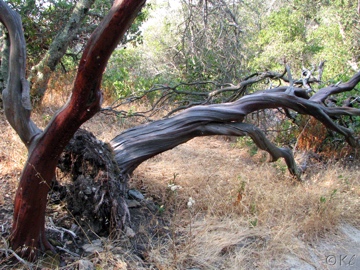
Wood is expensive. It can cost $600 per winter to buy firewood. Much of my property is natural chaparral, heavily populated with manzanita and red shank. These are very hard woods. Every year, I harvest deadwood from these trees and bushes. It provides me with free firewood and helps deter wildfires.
The new stove has a large firebox of 18”, an improvement over the old 16” stove. A chainsaw and a splitting axe are all I need to prepare the wood.
When I was a child, my father taught me how to build and light a wood fire in the backyard fire pit.
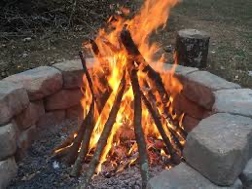
You start with some balled-up newspaper. Criss-cross some kindling in a layer over the paper. Make a tepee of small sticks around the kindling. Make a larger tepee around the small sticks. Light the paper. Fire. This method has been reliable for campfires, fireplaces, and wood stoves all my life. But there is a better way.
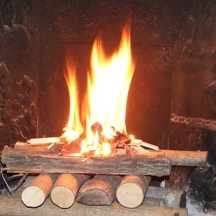
The trouble with a traditional tepee fire is that it flares up fast, then you have to add more large wood after a few minutes. I like an upside-down fire:
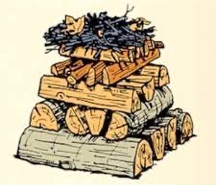
Lay down a layer of large wood pieces. Leave space between the logs. Criss-cross branches on top of the logs. Criss-cross large kindling over the branches. Nest a fire starter (wrapped in some paper) on the large kindling.
Pile small kindling on top of the fire starter. Light the paper. Fire. The upside-down fire starts fast. As the kindling burns, it drops embers down to the larger kindling and branches. The fire works its way down to the logs. The logs burn for at least 45 minutes before more wood is needed.
This year, friends trimmed the trees in their wooded yards and gave the branches to me. they even cut the wood to a convenient 16” length. I will not need to forage for deadwood, cut, or split the firewood this winter or maybe even next.
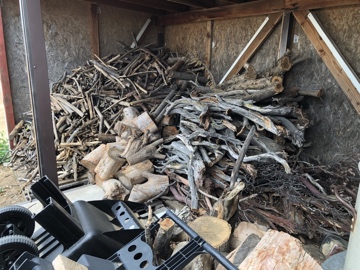
My woodshed is full. Thank you, dear friends.
IF YOU LIKE THIS BLOG YOU’LL LOVE MY BOOKS:
“Skydivers Know Why Birds Sing” by Ricki T Thues is now available on Amazon.
It is a Love story of Rick and Paula Thues and their 35 years of Skydiving.
Click HERE to buy the paperback or Kindle ebook at Amazon.

Follow Ricki T Thues on Amazon HERE.
ALSO AVAILABLE:
“Technically Human” by Ricki T Thues, the iMentor, is available on Amazon.
It is a compilation of selected episodes from this bLog which tell the story of Humanity through the eyes of the iMentor.
Click HERE to buy the paperback or Kindle ebook at Amazon.
The ebook version of “Technically Human” is also available on Kobo. Click HERE.
For you Barnes and Noble Nook readers it is available for Nook. Click HERE.
The “Technically Human” ebook is also available on Apple Books . Click HERE.




I will have to give the upside-down fire a try!
I felt quite proficient at building fires, but spent almost my entire (fire-building) life in California. Now that I’m in the tropics, I have had to modify my fire-building skills because even the wood seasoned for several years is quite damp. Even newspaper often refuses to burn. The upside-down technique might help dry out the large pieces as the fire burns down. I’ll let you know.
My gift to you and Paula! For the wonderful friends that you are to
Me