
Episode #885
January 17, 2026
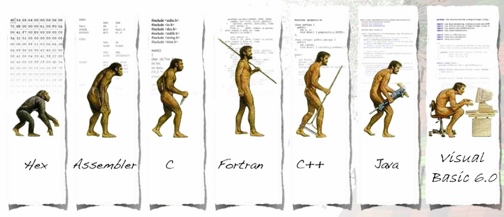
Programming has evolved
from configured toggle switches
to natural language programming.
The simplest (low-level) programming was the setting of banks of toggle switches. Each toggle switch in banks of four (nibbles) on the front panel of a MITS Altair 680 computer represented one bit. Across the bottom where sixteen switches representing a 16-bit memory address. This address, combined with eight switches representing an 8-bit piece of data (byte), gave the computer one line of machine code. The results of such toggle switch programming configuration were the data stored at a given address. If the program were to add 2 + 4 and store it in a given address, the LEDs would display the address in binary and the number six in eight-bit binary code.
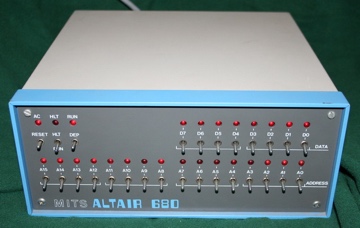
This simple programming generated simple results. It was arduous for the programmer and required technical mathematical knowledge to understand the results. This low-level programming gave direct instructions to the machine.
The next higher level programming was Assembly Language. Mnemonics, such as MOV (move), ADD (add), and JMP (jump), replaced raw binary instructions. This could be typed on a keyboard, and the computer’s assemblers would translate the mnemonics into machine code.
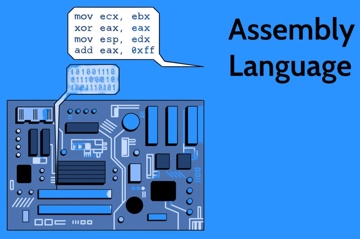
Assembly code required a great deal of code-language knowledge, but programming was much less physical labor than setting toggle switches.
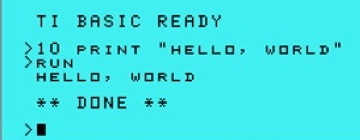
Third-generation High-Level Language (HLL) was programming which looked more like human logic than hardware instructions. Even though under the hood, languages like BASIC, COBOL, and FORTRAN were complex, they were much easier to write and understand. Their output was in plain English. The program: PRINT “HELLO WORLD”, displayed the words “HELLO WORLD” on the monitor.
Very High-Level Languages (VHLLs), such as SQL and Visual Basic, were less about controlling the computer and more about generating abstract answers. These highly complex languages made it possible for coders to create user interfaces that the average person could use.
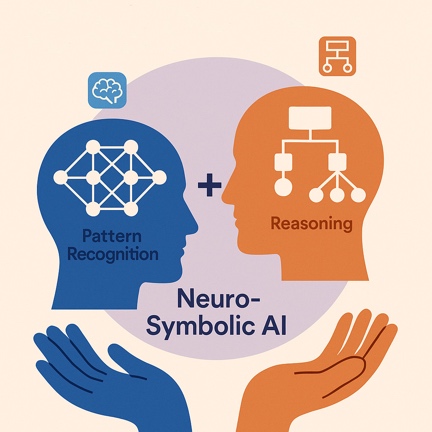
Symbolic AI planning languages allow the programmer to specify relationships or rules, and then the system figures out the procedure. This advancement has brought the programmer closer to being the designer, and the user has gained a research partner.
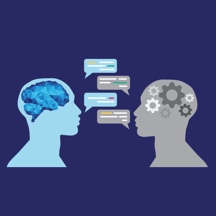
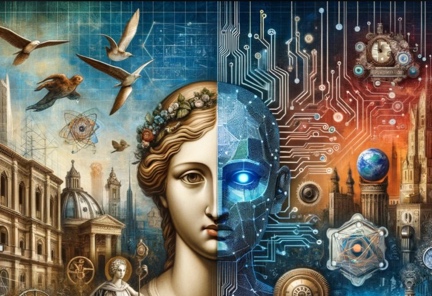
Today, we are entering the age of natural language programming. The Artificial Intelligence program is the highest level and most complex programming software in history. Application programmers use conversation to prompt the AI to write the program code. This environment allows programmers and users to work at the highest known level of abstraction. It is the beginning of a Renaissance of computer control. Humans provide the intent, and the AI provides the implementation.
The first programmers flipped switches.
Today’s programmers are you and I having a conversation with the computer.
IF YOU LIKE THIS BLOG YOU’LL LOVE MY BOOKS:
“Skydivers Know Why Birds Sing” by Ricki T Thues is now available on Amazon.
It is a Love story of Rick and Paula Thues and their 35 years of Skydiving.
Click HERE to buy the paperback or Kindle ebook at Amazon.

Follow Ricki T Thues on Amazon HERE.
ALSO AVAILABLE:
“Technically Human” by Ricki T Thues, the iMentor, is available on Amazon.
It is a compilation of selected episodes from this bLog which tell the story of Humanity through the eyes of the iMentor.
Click HERE to buy the paperback or Kindle ebook at Amazon.
The ebook version of “Technically Human” is also available on Kobo. Click HERE.
For you Barnes and Noble Nook readers it is available for Nook. Click HERE.
The “Technically Human” ebook is also available on Apple Books . Click HERE.