
Episode #890
February 21, 2026
Evan is twenty-four, Gen Z.
That’s what his driver’s license says.
Some days he has to check.
Mornings begin the same way: phone alarm, thumb swipe to turn it off, stare at the ceiling. The ceiling feels like a loading video screen—familiar but not informative. Evan waits for the room to assemble itself. Fan humming. Light through blinds. A car door slamming somewhere outside.
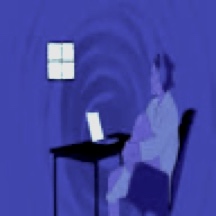
By the time he’s brushing his teeth, he’s already slipped into what he calls glass mode. Everything is visible. Nothing quite touches him. His reflection moves when he moves, but there’s a delay, like an unbuffered vid-stream. He watches himself spit, rinse, blink. The mirror shows nothing. It isn’t frightening anymore. It’s just how mornings go.
On the bus, everyone scrolls. Faces lit blue. Thumbs flicking. Someone laughs at a video. Evan doesn’t look up. The world feels thin—too sharp, too unreal, like it might crack if pressed.
Work happens in a co-working space with living plants and conversations that are less than real. Evan does his job well. He answers emails, adjusts layouts, writes copy that sounds confident and human. People tell him he has a good voice.
“Nice tone,” his manager says once.
Evan nods. Inside, nothing stirs. Not pride. Not relief. Just distance.
At lunch, he realizes he can’t remember if he ate breakfast. This happens a lot—not lost time exactly, just smudged time. He eats anyway. Hunger still cuts through the fog.
The dissociation crept in during college, somewhere between global crises and endless commentary explaining why everything was broken. Pandemic. Climate dread. Debt calculators. Screens full of outrage and aspiration. Caring too much about politicians who didn’t care. It started to hurt.
So his mind adapted. It stepped him back.
At first, glass mode had felt like relief. A dimmer switch. A way to keep functioning. Over time, though, distances grew. Conversations felt scripted. Achievements felt like they belonged to someone else. Life began to feel like content he was consuming rather than creating.
The hardest part wasn’t the numbness. It was the uncertainty.
Is this who I am? Or is this just what surviving feels like now?
At night, Evan presses a hand to his chest just to feel something solid. Sometimes he counts his breaths. Silence thickens the glass.
Coping didn’t arrive as a breakthrough. It started with irritation. One afternoon, Evan caught his reflection in a dark window. He looked back at himself. Almost there, like someone half there. The thought came quietly: I don’t want to keep disappearing.
So he started small.
He stopped wearing headphones on walks. Listened to shoes on pavement, birds arguing, traffic breathing. It was uncomfortable at first, like turning on bright lights. Then his body responded—shoulders lowering, breath slowing.
He searched words he’d avoided: dissociation, depersonalization. Other people’s descriptions felt familiar in a way that startled him. He booked a therapy appointment and didn’t cancel. When he said, “Sometimes I don’t feel real,” the therapist didn’t flinch.
He learned grounding tricks that sounded dumb until they worked. Cold water. Pressing his feet into the floor. Naming what was real in the room.
Some days, glass mode still comes. Probably always will. But now he notices sooner. Now he knows how to tap on the mirror from the inside.
On a Friday evening, Evan sits on his fire escape and watches the sky shift colors. He feels the metal beneath him, the breeze against his skin. For a moment—not perfect, not permanent—he feels here.
And for now, that’s enough.
IF YOU LIKE THIS BLOG YOU’LL LOVE MY BOOKS:
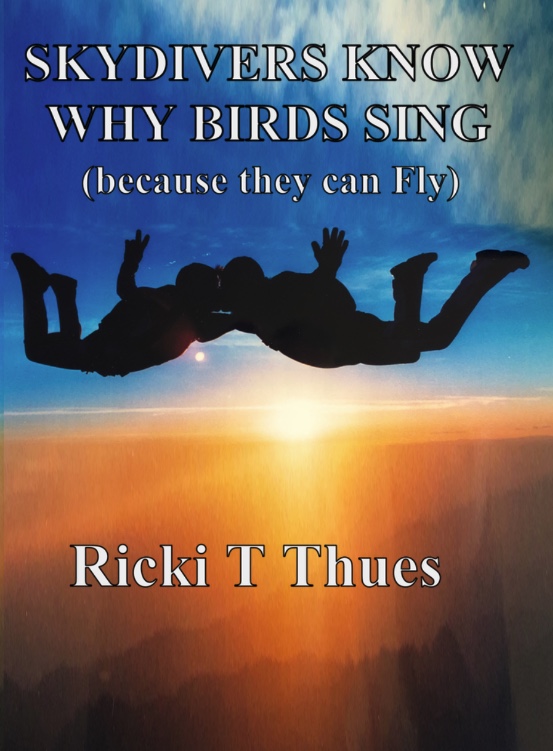
“Skydivers Know Why Birds Sing” by Ricki T Thues is now available on Amazon.
It is a Love story of Rick and Paula Thues and their 35 years of Skydiving.
Click HERE to buy the paperback or Kindle ebook at Amazon.
Follow Ricki T Thues on Amazon HERE.
ALSO AVAILABLE:
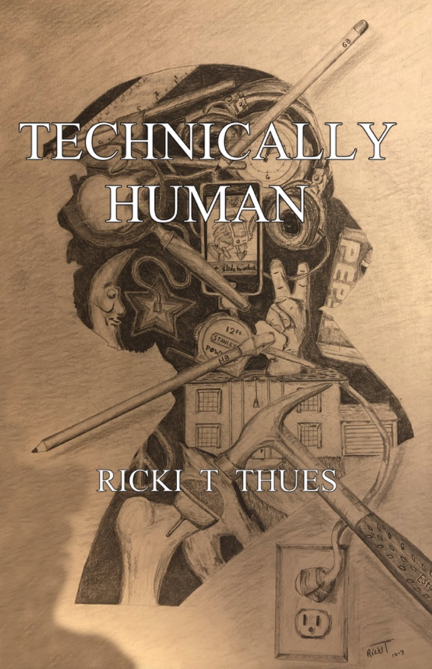
“Technically Human” by Ricki T Thues, the iMentor, is available on Amazon.
It is a compilation of selected episodes from this bLog which tell the story of Humanity through the eyes of the iMentor.
Click HERE to buy the paperback or Kindle ebook at Amazon.
The ebook version of “Technically Human” is also available on Kobo. Click HERE.
For you Barnes and Noble Nook readers it is available for Nook. Click HERE.
The “Technically Human” ebook is also available on Apple Books . Click HERE.



Dissociation is such an interesting topic. I wonder how it impacts the planning process for couples.