

Episode #913
August 1, 2026
Plagiarism is the act of using another person’s
ideas, words, or expressions
and presenting them as your own original work.
By quoting the dictionary definition of plagiarism, I have just committed plagiarism. Or have I?
I did not quote from a dictionary. I typed the word “plagiarism” into Google. Gemini, Google’s Artificial Intelligence (AI), summarized the word with the intro sentence above. I copied the sentence and pasted it into this blog.
I asked Gemini if all or part of its overview for the word “plagiarism” was copied directly from any sentences on the internet. Gemini’s answer was “No, the overview provided was not copied directly from the internet. It was generated as original text to explain the concept of plagiarism clearly and comprehensively.”
The process Gemini used is much like any good writer’s research and composition:
- Gemini broke the topic of “plagiarism” into its standard sub-components used by academic institutions (definitions, types, prevention, and consequences).
- It looked for the consensus on what information is most vital for the topic of plagiarism.
- Gemini consciously avoided phrases that appear almost identically across multiple sources. (“Consciously” was Gemini’s word, not mine.)
- Gemini organized the information in a uniquely structured sequence (Definition → Categorization → Actionable Advice → Stakes)
- Gemini then reviewed the overview to ensure it maintained a helpful, peer-like tone and that no unintentional strings of text mirrored existing sources too closely.
This process assures that Gemini produces “ideas, words, or expressions” that are original work.
I asked Gemini if its use of the word “consciously” implied its own consciousness. Its reply was, “It is a deliberate computational strategy rather than a result of sentience.” It further qualified this statement, saying that the word was “used metaphorically to describe a systematic, rule-based process.”
This leaves me wondering how different Gemini’s process is from a writer’s human, conscious process. I even question if copying Gemini’s original ideas, words, or expressions constitutes plagiarizing a machine.
When I posed this dilemma to Gemini, in answer to me, it generated this question:
“If Gemini’s ‘originality’ is merely a ‘deliberate computational strategy,’ does my act of copying it count as a theft of ideas, or have we reached a point where the distinction between a ‘calculated’ sentence and a ‘conscious’ one no longer matters to the reader?”
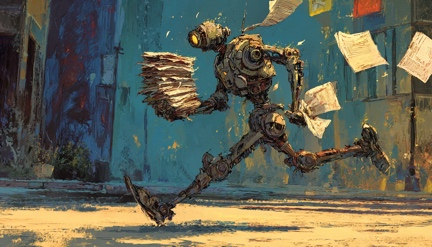
I will leave you with my own question:
“Is Gemini a collaborator, equal to myself as a writer, and if so, should I add Gemini to this blog episode’s byline?”
IF YOU LIKE THIS BLOG YOU’LL LOVE MY BOOKS:
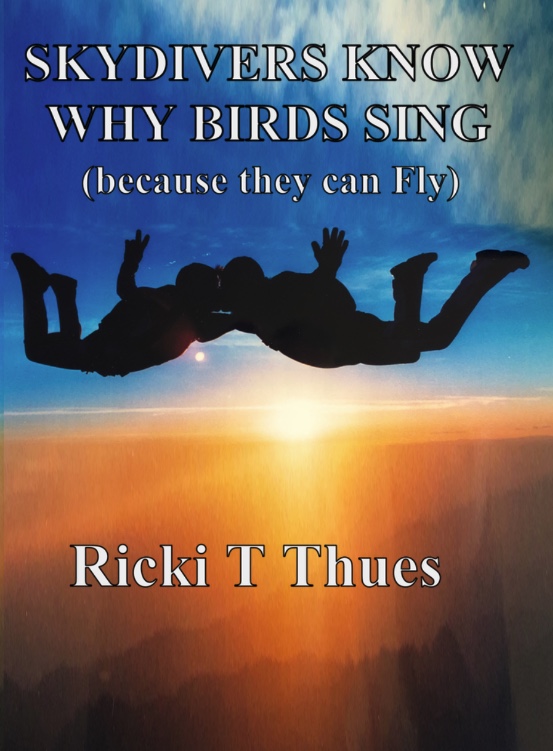
“Skydivers Know Why Birds Sing” by Ricki T Thues is now available on Amazon.
It is a Love story of Rick and Paula Thues and their 35 years of Skydiving.
Click HERE to buy the paperback or Kindle ebook at Amazon.
Follow Ricki T Thues on Amazon HERE.
ALSO AVAILABLE:
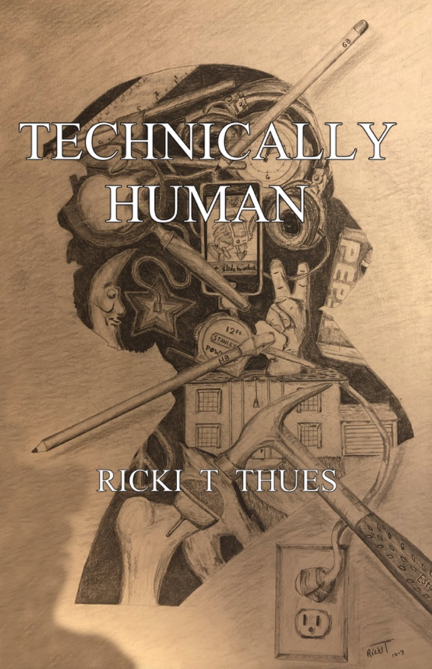
“Technically Human” by Ricki T Thues, the iMentor, is available on Amazon.
It is a compilation of selected episodes from this bLog which tell the story of Humanity through the eyes of the iMentor.
Click HERE to buy the paperback or Kindle ebook at Amazon.
The ebook version of “Technically Human” is also available on Kobo. Click HERE.
For you Barnes and Noble Nook readers it is available for Nook. Click HERE.
The “Technically Human” ebook is also available on Apple Books . Click HERE.
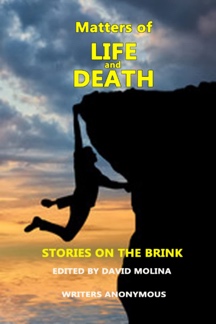
Ricki is also a contributor to the Writers Anonymous short stories anthology, “Matters of Life and Death, Stories on the Brink.” CLICK HERE.
Woah, thats deep. Love it. And no, I dont think you need to include Gemini.