
Episode #901
May 9, 2026
Slowing thought down enough to observe oneself is the path to clarity.
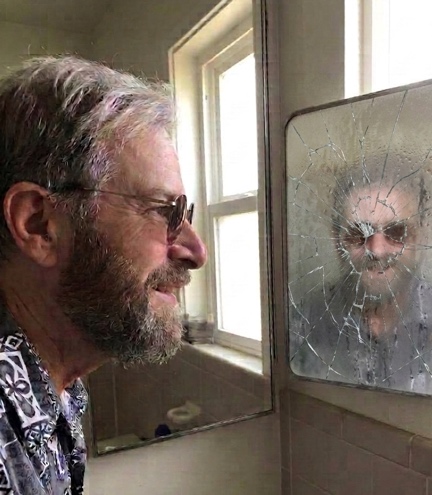
When thinking becomes reflective, it is like a flawed mirror, too smooth, and nothing appears, too sharp and it shatters. The right texture reveals the truest reflection.
I prepare for interviews, examinations, and conversations by rehearsing them in my mind. I play out the encounter, tracing the possible paths a line of thought might take. Like a navigator charting uncertain waters, I consider where the conversation might go and where each branching could lead.
During a conversation, I sometimes end a thought early and allow the other person to pick it up. In those moments, I’m balancing two efforts: listening closely while quietly shaping what I might say next. I don’t want to miss what’s being said, but I also want to complete my thought. That blank look on my face is simply me slowing down, preparing for what comes next.
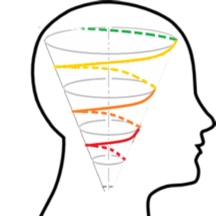
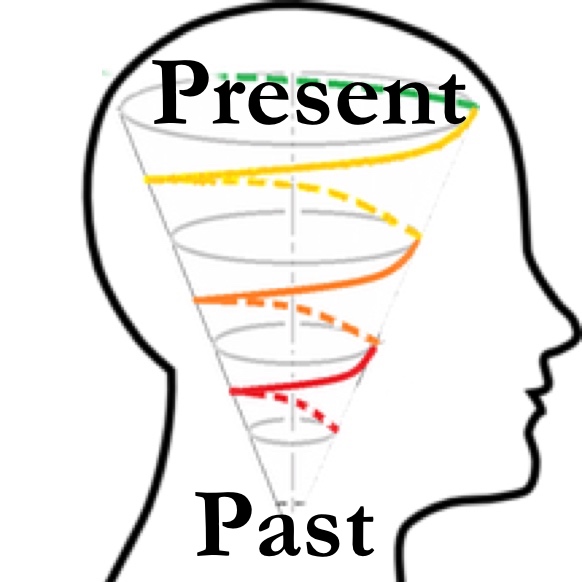
I think of memory as a cone, lined with experience. The earliest moments sit at the bottom in the narrow tip. As time passes, new memories spread upward along the inner surface, widening toward the present. Recent memories are near the top, easy to reach. Older ones require a gradual descent, a spiraling search down the cone. The earliest memories take the longest to retrieve. In computing terms, that’s retrieval time—and it requires a pause.
These pauses, however brief, often invite others to finish my sentences. I resist filling the silence with “umms” or “ahhs,” but the gap can feel like an open invitation for the other to speak. When someone completes my thought, it can pull me off course, sometimes causing me to lose my original point. That sense of being momentarily lost is hard to avoid.
This is why I try to honor silence when others pause. It gives them space to think, and it gives me time to absorb what has already been said. Often, it’s in their final phrase that meaning becomes clear. Silence, then, is not empty—it’s an asset.
“It is better to remain silent at the risk of being thought a fool, than to talk and remove all doubt of it.”
— Maurice Switzer, Mrs. Goose, Her Book (1907)
Patience earns its place as a virtue through what it yields: delayed gratification, emotional steadiness, clearer decisions, deeper understanding, resilience, and even a path toward wisdom. Much of this can be gained through something as simple—and as difficult—as silence.
One day, we may have ultra–high-bandwidth interfaces linking mind to machine, processing questions and returning answers in seconds. Conversations between two such augmented people could become nearly instantaneous, yet silent to the outside world.
But I wonder whether intent would remain as clear without the nuance of voice. For my part, I think I will prefer to slow down and listen—to let others finish their thoughts.
To take the time to understand them.
IF YOU LIKE THIS BLOG YOU’LL LOVE MY BOOKS:
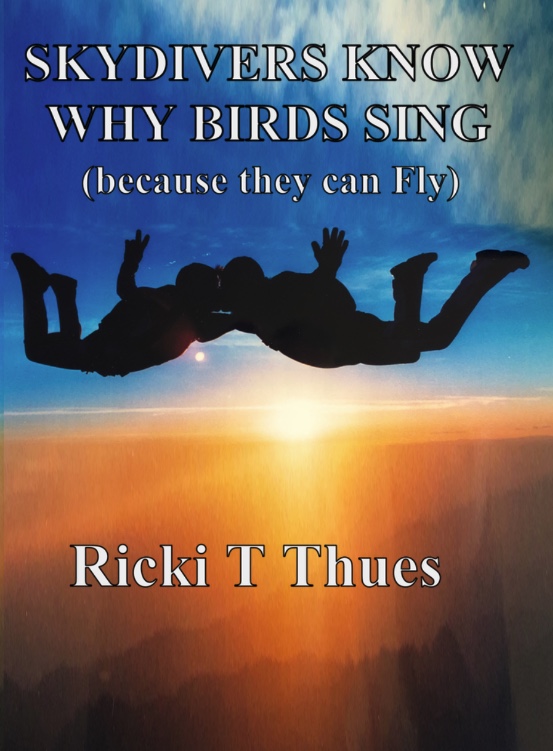
“Skydivers Know Why Birds Sing” by Ricki T Thues is now available on Amazon.
It is a Love story of Rick and Paula Thues and their 35 years of Skydiving.
Click HERE to buy the paperback or Kindle ebook at Amazon.
Follow Ricki T Thues on Amazon HERE.
ALSO AVAILABLE:
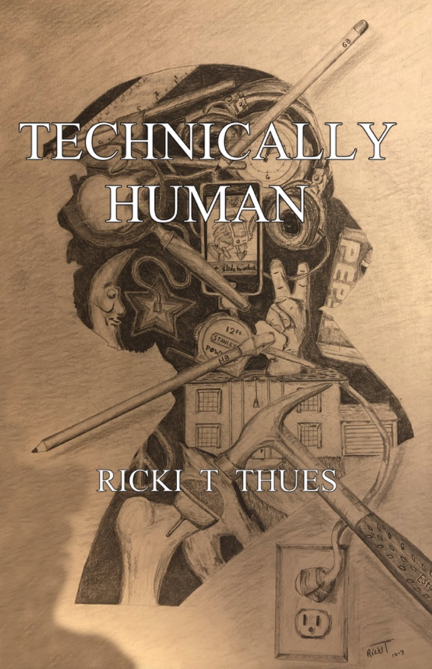
“Technically Human” by Ricki T Thues, the iMentor, is available on Amazon.
It is a compilation of selected episodes from this bLog which tell the story of Humanity through the eyes of the iMentor.
Click HERE to buy the paperback or Kindle ebook at Amazon.
The ebook version of “Technically Human” is also available on Kobo. Click HERE.
For you Barnes and Noble Nook readers it is available for Nook. Click HERE.
The “Technically Human” ebook is also available on Apple Books . Click HERE.



Very well said